Math with Confidence Kindergarten Review: What We Loved and Didn’t Love
Everyone is talking about Math with Confidence! This modern math curriculum from Kate Snow and the Well-Trained Mind Press has quickly developed a devoted following. This post contains all my thoughts about the kindergarten level of Math with Confidence–plus whether we will be using it again or not!
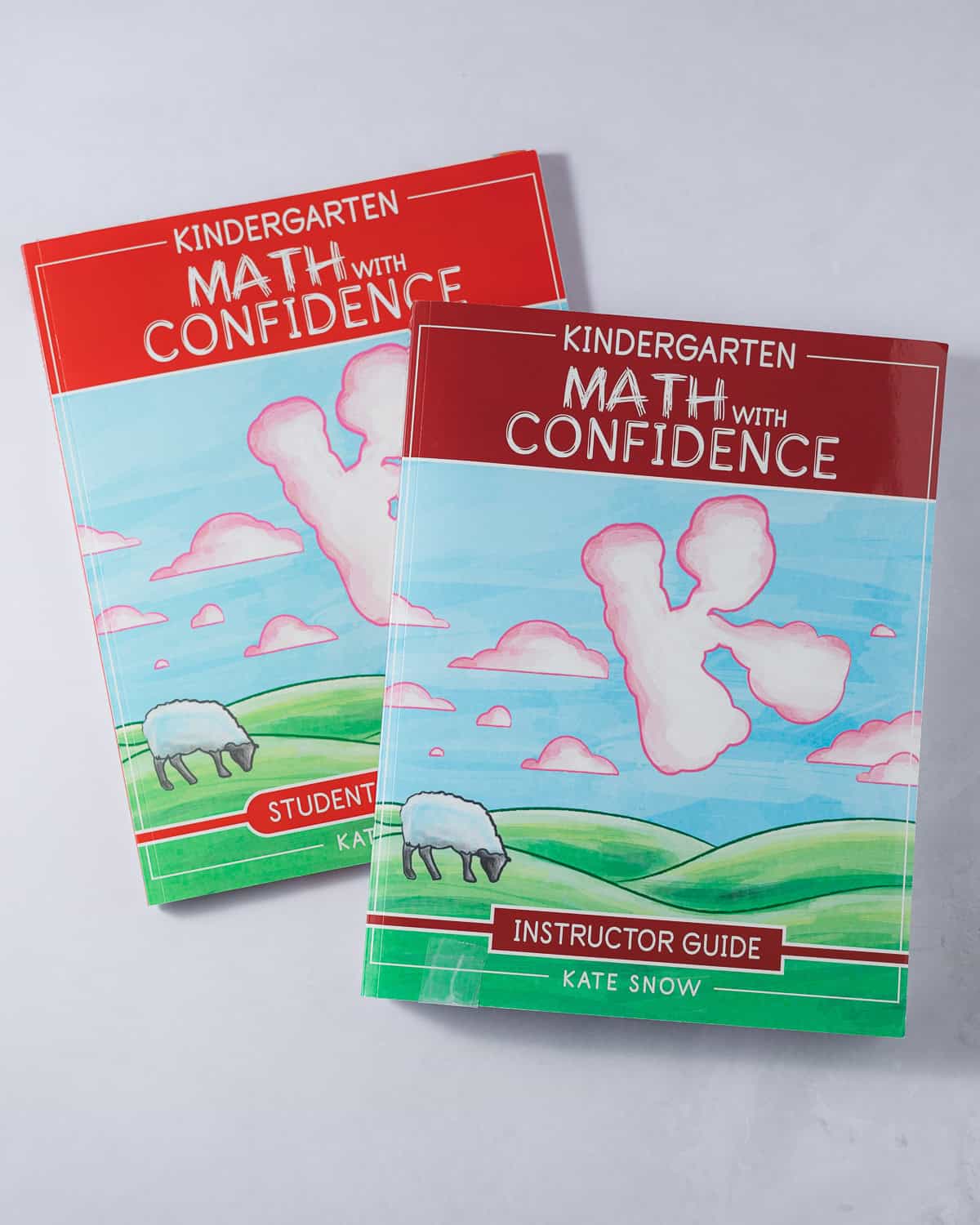
Since Math with Confidence by Kate Snow is still quite new, I wanted to share my experience with using the kindergarten level. I have mixed feelings about the program so if you are looking for an honest review this is it.
I’ll share everything I loved and did not love about the program. I’m breaking down what worked, what didn’t, and anything you should know before diving in.
You Should Read This Before You Teach Math
If you’ve never browsed Kate Snow’s blog, I can’t recommend it enough. I don’t think she posts much these days, but everything she has written (even her detailed responses in the comments sections) is so incredibly helpful.
Here’s a few of my favorite posts from her:
- How to Choose Math Curriculum
- Switching Math Curriculum
- Summer Math Options
- Do I Have to Finish the Math Book?
- Should I Supplement My Math Program?
Also if you visit each of her pages for the individual grades/levels of MWC–she includes her complete list of math picture book recommendations for each grade. We’ve enjoyed discovering math-y picture books from these wonderful lists.
Remember! Before we start, I’ll remind you that even though a curriculum might work incredibly well (or not well!) for any given child or family, that doesn’t mean it will or won’t work for you and your family. So, rather than reading through my review to discover if I liked it or not, instead read through to understand how the program works and if you suspect would be a hit in your homeschool.
Quick Overview of MWC Kindergarten
Okay let’s start with a quick overview of all the details:
- Subject/Grade Level: Math with Confidence goes from kindergarten level to 6th grade. 6th grade will be available Summer 2026.
- Publisher: Well-Trained Mind Press.
- Format: Printed books OR purchase a printable PDF on the Well-Trained Mind website.
- Style: Designed to be open-and-go with a heavy focus on hands-on, conceptual math. It includes a lot of games or hands-on exercises with the tutor/teacher. More traditional programs tend to drill math facts with flashcards or worksheets instead.
- Religious or Neutral? The program does not include religious material.
- Time: Lessons should take around 15-20 minutes. Maybe a little longer in the higher levels.
- Cost: Very affordable! Around $50 for the teacher’s manual and student book. The higher grades are a little more expensive (more printing volume).
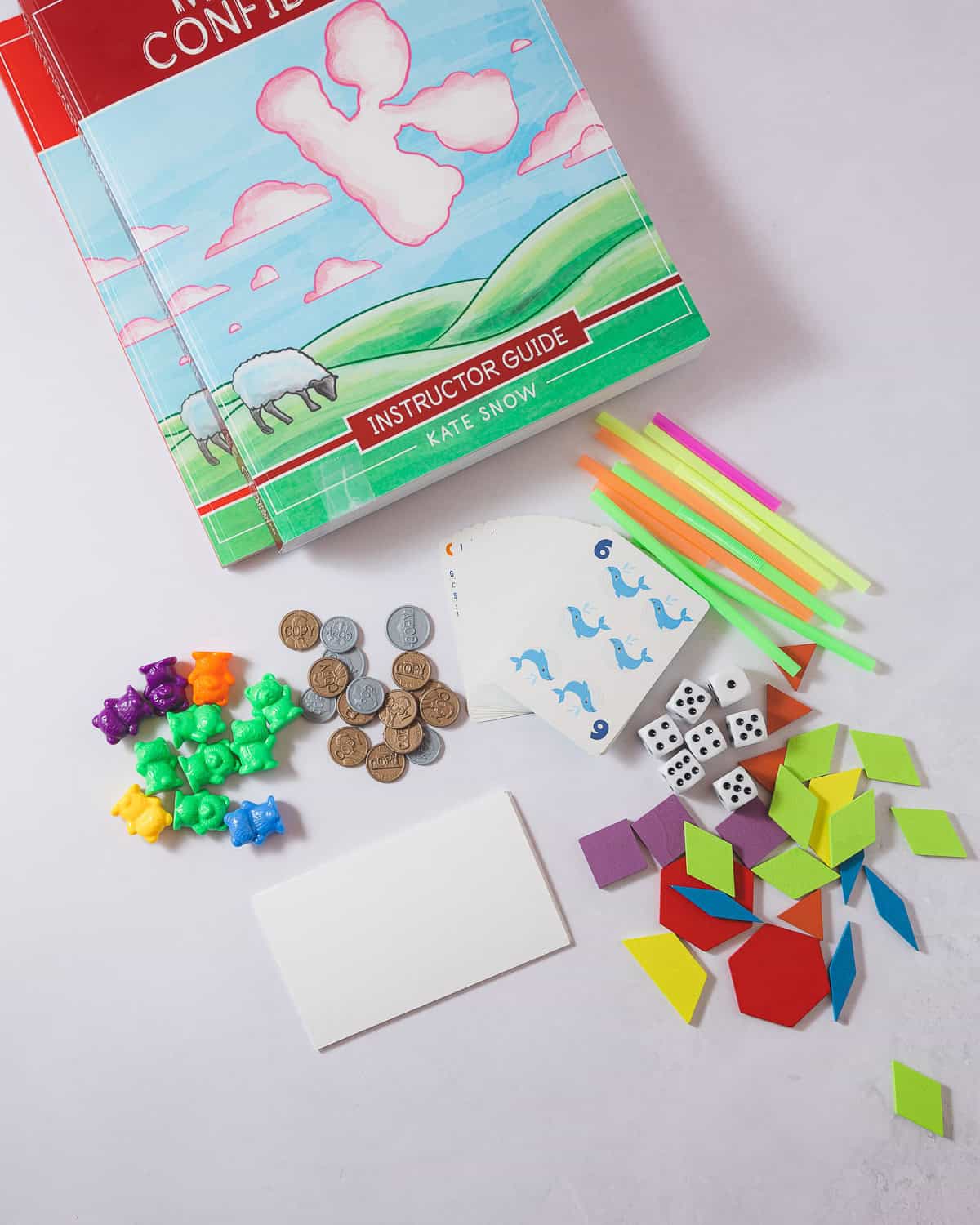
- Required Supplies: You will make your own math kit, but Kate provides instructions on how to do this and everything is very affordable. If you have taught any homeschool math before, you probably have most of it.
- Where to Buy: The program is available many places, but I like Amazon because it’s convenient and offers free shipping. If you want a PDF copy to print and bind yourself, you can purchase this from the Well-Trained Mind website. You could also use the PDF without printing if you have a Kindle or laptop you want to read the scripted lessons from. The student book should be printed.
Why We Chose Math with Confidence
When I started teaching kindergarten for the first time as a homeschool parent, I selected My Father’s World (K) for our all-in-one curriculum. I realized right away there was not enough math. For some, this is perfect for a gentle introduction to kindergarten, but I found it far too easy.
So I started researching math options and stumbled on Kate Snow’s blog. I loved everything she had to say about teaching math. When I realized she was in the process of writing her own math curriculum I was very interested.
I ideally wanted to choose a math curriculum I would use as sort of a “test” for kindergarten and then hopefully we could just keep going with it for the rest of elementary. Which is why I chose a particular curriculum to try instead of just teaching the basics myself (which is certainly do-able for kindergarten).
I looked into several other options like Math Mammoth (which provides suggestions for teaching kindergarten math, since there is not a kindergarten level offered), Singapore, and Horizons. I even looked at aBeka which I wasn’t keen on, but the workbook was so cute and colorful I kept coming back to it.
I found so many gushing reviews online for Math with Confidence, that I finally decided to give it a go. I liked the sound of gentle math program that included lots of hands-on activities and conceptual learning to start our math journey.
The price was also a big plus! I could get everything I needed for around $50–versus some programs that were closer to $150 or even $200.
How We Used It
Since we started the year with a different program, we began MWC about 6 weeks later than the rest of our curriculum. This worked out fine because the book is structured so that 4 lessons are expected per week. We just took a few extra weeks during summer to finish up.
For us, lessons usually took around 15–20 minutes, depending on how long we played the games.
Although it’s “open-and-go”, I found it necessary to preview the lesson ahead of time. Whenever I skipped this I was inevitably caught by surprise by needing to grab some extra item or something.
We followed the lessons as written for the most part, though I occasionally swapped in our own manipulatives or simplified a game if we were short on time.
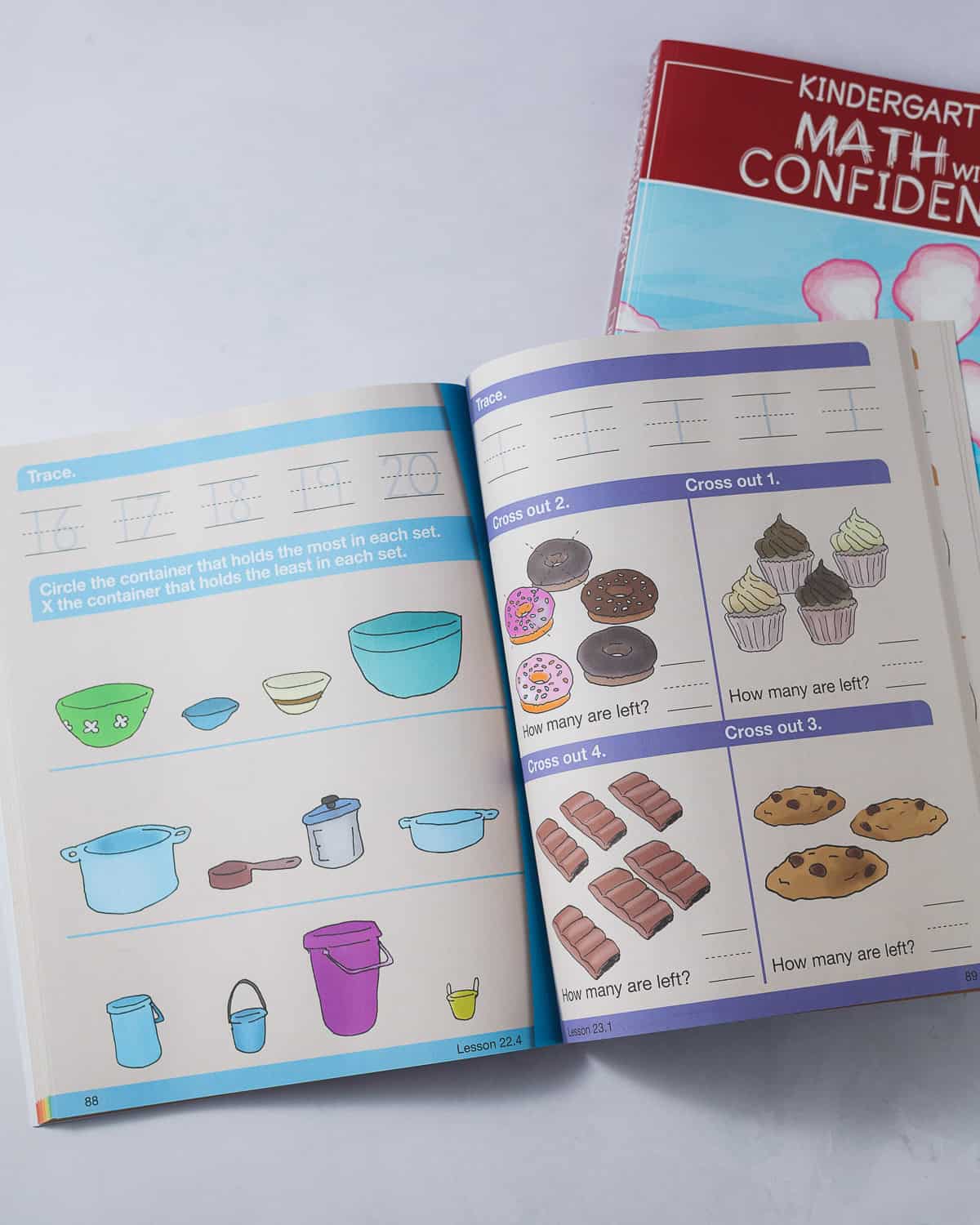
I realized towards the ends of the book when I was getting tired of all the games that there are ways to simplify or speed them up. So if they bother you too, there are options.
What We Loved
Here’s a few of things we loved with more detail below:
- Scripted instructor’s guide
- One-on-one format
- Pace
- Affordable
- Conceptual learning with lots of games
The Scripted Instructor’s Guide
The instructor’s guide might appear a little overwhelming at first, but truly has everything you need to successfully teach lesson after lesson of math.
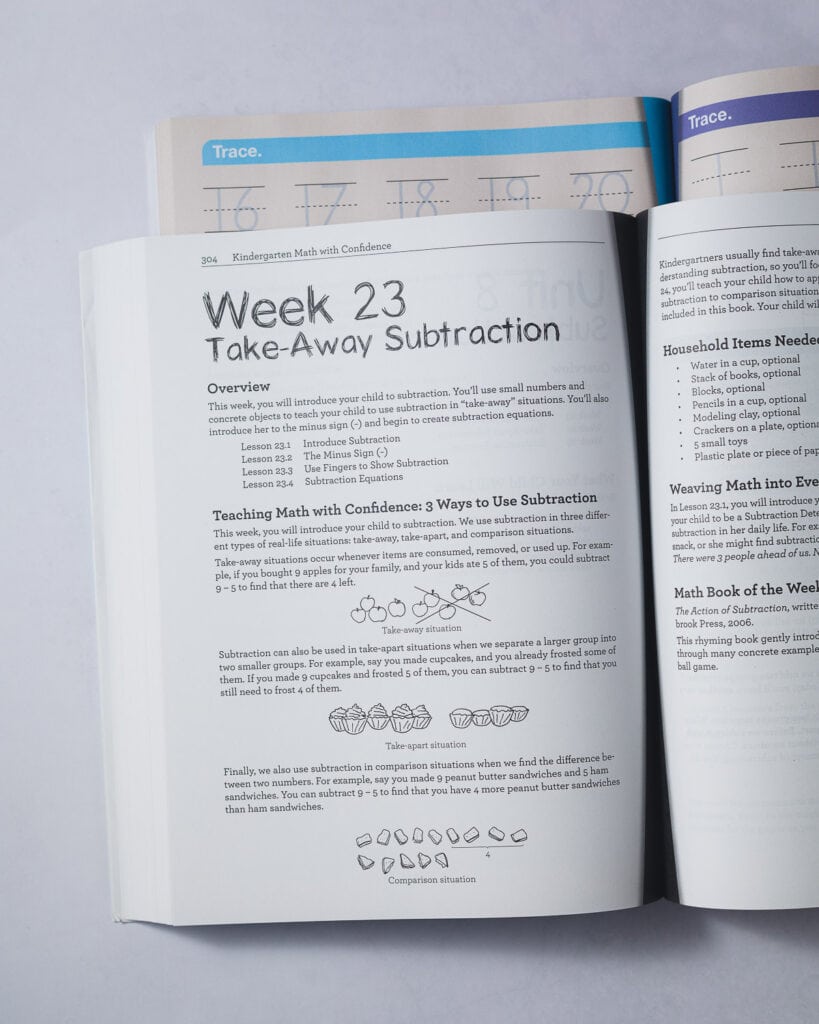
I liked how it easy it was to follow the scripts. The entire manual is scripted. You read the bolded text and the rest is for the teacher/parent.
The scripted lessons kept me clear and concise as the teacher–which is ideal especially for kiddos that start dozing off with long and lengthy explanations!.
I found that any question I happened to have was answered right in the text.
You are also provided with clear guidelines on if your student should progress, or take some more time to practice. Very helpful!
One-on-One Format
The one-on-one format of the lesson is SO helpful for homeschoolers. We’re often stuck adapting materials that are written for classroom use, which can be a hassle.
Pace
The pace is perfect for kindergarten.
I’ve perused several of the other grades and I am curious if some students end up just flying through everything. I’d like to read more reviews from anyone who has finished the complete series (though the 6th grade books are still yet to ship).
Kate Snow designed MWC to be used for four lessons per week (with an optional fifth enrichment lesson). This is really helpful for families that have a co-op day scheduled into their week–or just like finishing school a day early!
I do think the enrichment lessons adds a lot–I personally would not skip these.
Affordable
One of the reasons I decided to try this math was the affordability. Homeschool materials can add up quickly.
The math kit/manipulatives are also very inexpensive to put together. It’s a lot of writing out your own flashcards, trimming straws for manipulatives, and grabbing stuffed animals and similar toys for math problems.
Games
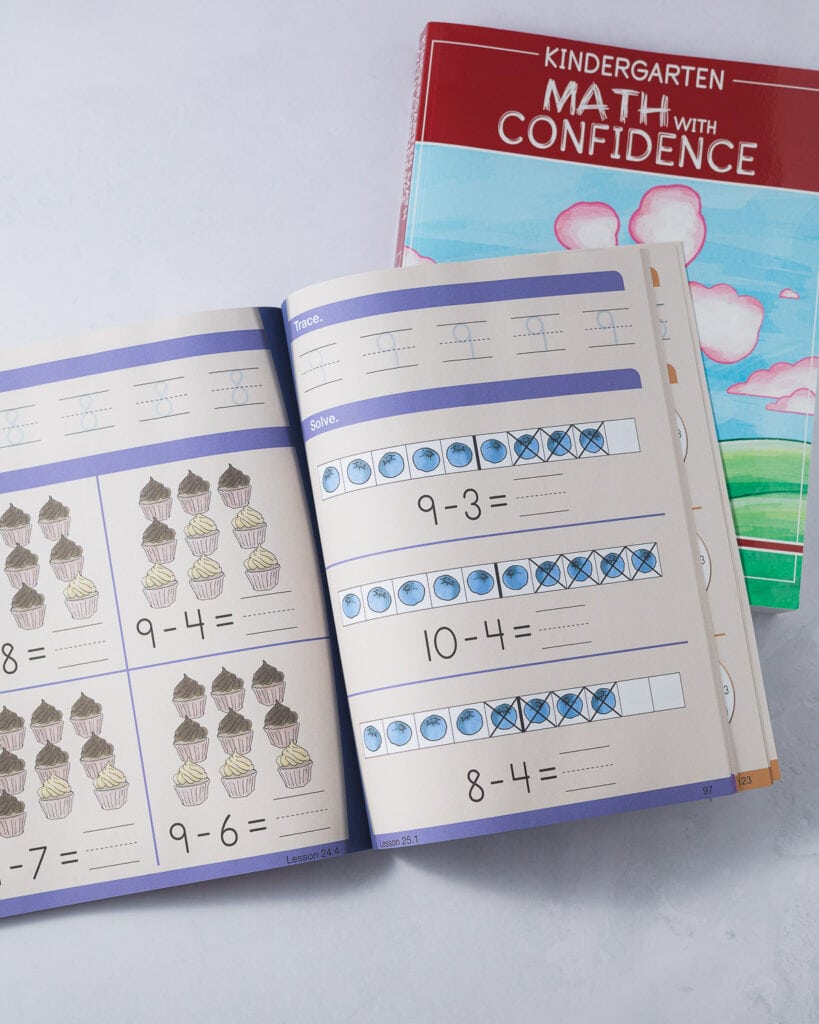
Almost every skill is taught using a hands-on method. You won’t just take some counting beans out for a few problems and dive into worksheet after worksheet. Kids really love this. Playing “store” or “Go fish” is way more fun that a worksheet.
Everything is taught “conceptually” versus “procedurally”. Kids are taught how to understand numbers and develop their number sense instead of just memorizing math facts without any real understanding.
What Didn’t Work for Us
Some of the best parts of the curriculum were also the most challenging!
The Games
I did not enjoy playing all the games. I loved how the teaching establishes a strong number sense and true understanding. I loved teaching the lesson with Kate’s incredible math scripts.
I just felt constantly overwhelmed with the hands-on warm-ups, the manipulatives for new concepts, and then finishing with games. It might only be 20 minutes, but it’s a packed 20 minutes! Especially if any of your other subjects (such as reading) are very hands-on as well.
For families who are homeschooling multiple children, this could get especially tricky. Other programs tend to use worksheets (often with printed manipulatives) to cover review and practice–versus using games and activities that require a teacher’s lead to complete.
The games and activities may also take longer because your child will love it and want to keep going. This is great if you have the time, but if you are teaching multiple children it can be a challenge.
You will have to decide what makes the most sense for your homeschool.
Independent Learning: I’ve noticed a lot of homeschool parents want math to be something where their child is totally independent. I don’t think this is a good goal with math. Math requires a teacher. It requires hands-on learning. It requires one-on-one instruction! That said, some programs will be less teacher-intensive than others, so look closely at how the lessons are taught and decide what works best for both you and your child.
Too Many Moving Parts
The DIY math kit is both a blessing (it’s affordable!) and a challenge.
Inevitably, we’d lose a card from set of homemade flashcards or my toddler would pilfer a counting bear in the middle of a lesson. Since all your cards are made from the same index cards, it’s easy to misplace the different ones you might need unless you stay very organized.
It felt like a lot of moving parts for some reason. I kept everything tucked into our math box, but if we ever do another level of MWC I would definitely work a little harder to keep it organized.
Text-Heavy Teacher’s Manual
The teacher’s manual is pretty beefy (especially in the higher-level grades) and it’s very heavy on text. If you don’t like black-and-white texts it might be too much.
On the other hand, we used BJU math (spoiler alert) in first grade and that textbook is designed for a classroom and the text (while colorful) is tiny and super packed into the book, arguably worse! So unless you are using a video-based math, there is possibly no winning with this one!
No Video Instruction
I do think the instruction in the instructor’s guide is more than adequate, but if you would rather teach math with the aid of instructional videos then you’ll want to know that this program does not have videos.
Is Math with Confidence Right for Me?
After using the kindergarten level and researching grades 1, 2, and 3, here’s my general thoughts.
I think the curriculum is best for:
- Anyone who wants to prioritize number sense and a conceptual (versus procedural) math education
- Homeschool parents who enjoy teaching through games and hands-on activities
- Parents who are organized and will keep their math kit ready-to-go
- Kids who learn best through movement and play
- Families with time to invest in one-on-one instruction
I don’t think it will be a good fit for the following families/students:
- Parents looking for a more procedural or workbook-heavy approach
- Families juggling multiple young kids or who require a program with more independent work (though remember, math still requires teaching time!)
- Anyone who who prefers drill (such as worksheets and flashcards) over games or hands-on practice
Final Thoughts
Kindergarten Math with Confidence is a well-designed, gentle introduction to math. We really enjoyed it, but also didn’t feel quite settled with it.
While I appreciate the program’s thoughtful pacing and strong teaching guidance, I realized I wanted to try something that wasn’t as teacher-intensive.
I considered BJU Math and Christian Light Education Math moving forward and went with BJU for first grade.
I found that BJU was a little more intense schedule-wise (180 lessons with no lighter “enrichment” lessons like Kate offers). It was a lot more worksheets. Each lesson required deomstration/practice from the teacher’s guide followed by two pages of worksheets.
The worksheets were sometimes light (particularly if the subject was relatively easy like shapes or measuring), sometimes quite hefty (like a two full pages of 3-digit math practice). The teacher’s manual wasn’t always that fun to teach from–but it did offer lots of practice and usually used manipulatives in the instructional portions.
BJU offers some conceptual and procedural learning, though you’d have to really work with manipulatives more to get the kind of number sense that MWC develops. It also did not have the wonderful script for the teacher. It had things to say, but it all felt pretty standard–none of the carefully crafted “aha” language that Kate Snow wrote so well in her books.
I found that I really liked using a curriculum (BJU) where portions of the lesson could be completed solo and I had some spare time to quickly prep our next subject or help my toddler with something.
SO. That leaves me with a hard decision for second grade! Finishing up this overdue review had me looking at MWC again and wondering if I could switch it up a little bit here and there to be able to take advantage of the awesome script and conceptual learning, but somehow give myself a little break on the games and such.
Regardless, I think it’s important to remember that so long as you’ve selected a thoroughly vetted program and aim to teach it well it’s all going to be fine. It’s okay to choose a program that provides a structure that suits your homeschool.
If you’re the kind of homeschooler who loves hands-on learning and enjoys playing games with your child, this could be a wonderful fit for your family. Just be prepared to stay organized–and play many rounds of the favorite games!
Answers to Common Questions
I see these questions pop up a lot, so I wanted to answer some of them here.
Do I need the teacher’s manual?
YES. Please don’t skip the instructor’s guide. All of your script and lessons and even information on how to use the worksheets is in there. So if you just buy the student guide you’ll have a sort of confusing math practice-ish book. It’s just not designed that way.
The lessons and warm-up reviews are all taught hands-on with one-on-one lessons straight from the instructor’s guide. The worksheet provides a complement and a place to practice written work.
You need both for sure!
How many levels does the curriculum go through?
Math with Confidence starts at Level K and goes through 6th grade.
How do I know which level my student will need?
You can read Kate’s article about how to assess your student’s math abilities and place them in the correct level of math.
Can I use this program AND another math?
You can! Be careful about doing too much. Kate’s article about why it is best to do one math program is excellent and great food for thought. You could also use something different for summertime practice, which is a lower-stress way to increase confidence and get that practice in without overwhelm.
Where to Find It
Ready to try Math with Confidence? Check it out on Amazon!
Thanks for reading!
~Ellen